
Takafumi Obara, MD., PhD.
Affiliations: Department of Emergency, Critical Care, and Disaster Medicine, Faculty of Medicine, Dentistry, and Pharmaceutical Sciences, Okayama University, Okayama, Japan
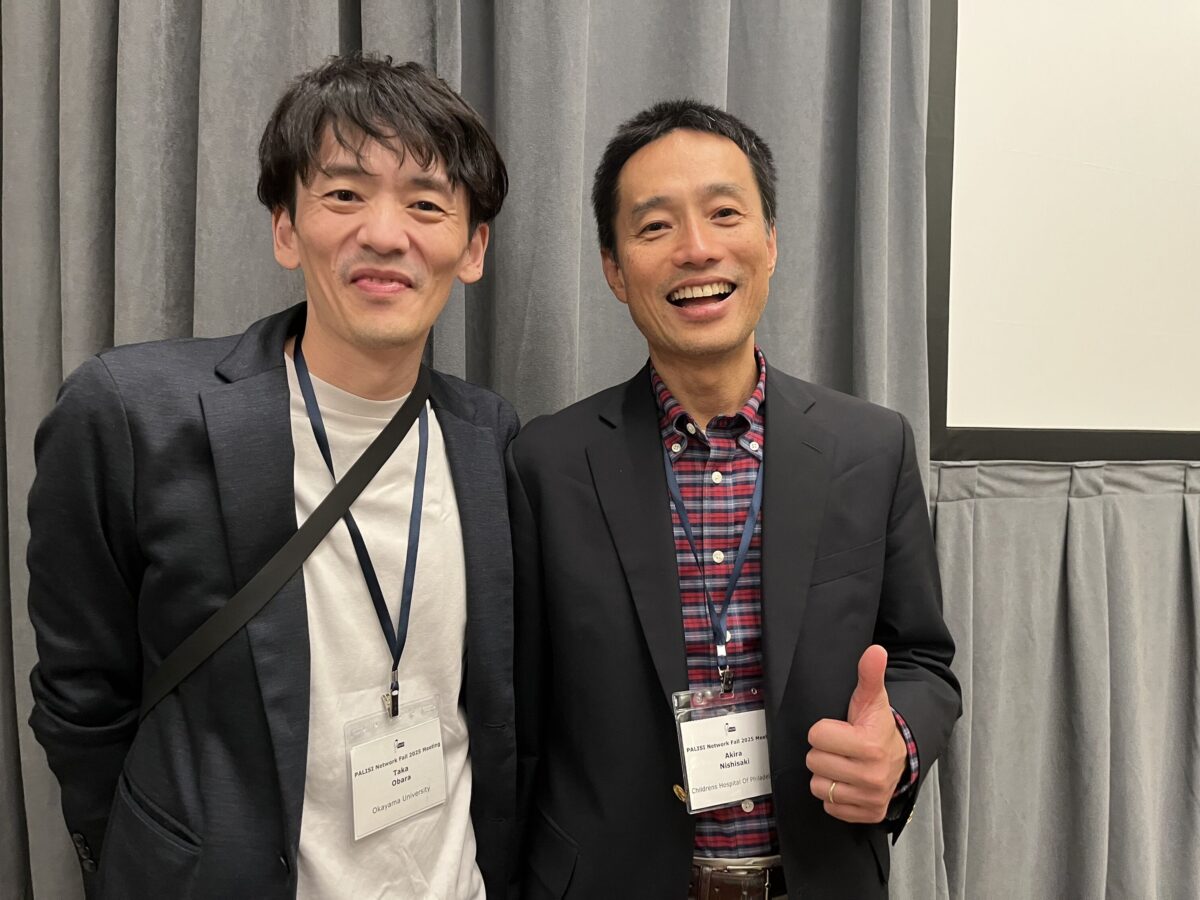
As the first recipient of the JMSA–Nishisaki Pediatric Critical Care Education in North America Grant, I had the privilege of attending the Pediatric Acute Lung Injury and Sepsis Investigators (PALISI) Network Fall Meeting 2025, held in Montreal, Canada, from September 8 to 12. This experience was a valuable opportunity to broaden my perspective as a pediatric intensivist, to recognize the importance of international collaboration, and to reflect on the future direction of research in Japan.
CLINICAL RESEARCH COURSE (CRC)
On the first day, I participated in the Clinical Research Course (CRC), which gathered 38 early-career researchers from diverse professional backgrounds. The faculty consisted of world-renowned leaders in pediatric critical care, and the sessions were conducted in a collegial and interactive atmosphere. The course addressed not only the significance of clinical research but also practical topics such as career development, strategies for obtaining research funding, and work–life balance. Particularly striking to me was the North American model of mentorship. In Japan, trainees often pursue projects assigned by supervisors in a one-directional manner. In contrast, in North America, mentorship is reciprocal and collaborative, with an emphasis on pursuing topics that genuinely interest the investigator, and connecting with specialized mentors across institutional boundaries when necessary.
In addition, we received training in concise research presentations (“pitch”) and effective slide design and delivery. It was impressive to see participants who had practiced during the CRC later give significantly more polished presentations in the main meeting. Such comprehensive courses on clinical research are rarely available in Japan, and I strongly felt that, if adapted to the Japanese context, this model could serve as an important step in conveying the appeal of clinical research to young clinicians and allied health professionals.
PALISI NETWORK FALL MEETING 2025
The meeting began with a reception featuring a commemorative lecture by Professor Jacques Lacroix, a founding leader of PALISI. When I met him afterwards, he kindly listened with genuine interest to my research, leaving me with a deep impression of the openness and inclusiveness of the PALISI community.
PALISI differed markedly from the conferences I had previously attended, with a strong emphasis on introducing new study proposals and sharing progress, and only very limited presentation of final results. After each presentation, lively and constructive discussions took place, aimed at refining the content and enhancing inter-institutional collaboration. Given my involvement in the ICU management of critically ill pediatric emergency patients and in multicenter studies on long-term outcomes in Japan, the sessions on traumatic brain injury and nutrition, family-centered care, and acute encephalopathy were particularly relevant. They offered important insights into linking clinical practice with research. Moreover, discussions addressing the social and political challenges of sustaining international research, as well as the leadership needed to drive it, provided perspectives rarely available in Japan.
In the afternoon, the meeting was organized into subgroups to present new proposals and review ongoing projects. I attended sessions of PEDAL (use of big data), POST-PICU (post–intensive care outcomes), and PREVENT (mechanical ventilation). What struck me was that in many areas, artificial intelligence was being actively applied to the analysis of large clinical datasets, not only for identifying etiologies and supporting decision-making, but also for predicting deterioration and evaluating outcomes, including mortality. These discussions were highly stimulating and thought-provoking.
FUTURE PERSPECTIVES
The most striking aspect of PALISI for me was the participants’ strong sense of mission and generosity. Even during breaks, constructive discussions were taking place everywhere. The focus was never on individual honor or success, but rather on a shared commitment to improving outcomes for critically ill children. As all sessions were held in a single venue, it was easy to form new connections, and ideas from diverse perspectives were readily incorporated, visibly enhancing the research projects as they progressed. Although I was a first-time attendee and a non-native speaker, I was warmly welcomed. Colleagues listened attentively even to my brief pitch-style explanations, offered constructive advice, and introduced me to appropriate experts, which reflected the generosity of the community. This openness and support reflected the true spirit of leadership in the field. I was also inspired to observe the central role played by Drs. Nishisaki and Kawaguchi in the meeting, to interact with Drs. Keiko and Maki working in PICUs in the United States, and to tour the PICU at CHU Sainte-Justine through the courtesy of Dr. Philippe. These experiences will remain invaluable in my career.
In Japan, young clinicians in pediatric intensive care often focus their research on case reports or single-center retrospective studies, and multicenter or international collaborations are still perceived as somewhat distant. This meeting reminded me that by taking even a single step beyond our immediate environment, a much broader world of research becomes accessible. Moving forward, I am committed to pursuing clinical research with a more global perspective and to sharing these insights with the next generation of Japanese pediatric intensivists and researchers.
ACKNOWLEDGMENT
I am sincerely grateful to the JMSA–Nishisaki Grant and all those involved for providing me with this invaluable opportunity. This experience has strengthened my resolve to continue contributing, even in a modest way, to the advancement of pediatric critical care in Japan and beyond.